

A Pediatrician’s Guide to Summer Safety
Medically reviewed by board-certified pediatricians, June 2026.
Summer is a magical time for kids – a season defined by exploring nature, endless playdates, and adventures on vacation. To ensure your family stays safe this summer, our medical team has created a complete guide with all the reminders a parent might need. By establishing small habits today, you can eliminate the most common preventable childhood risks of the season.
Summer Safety Tip #1: Heat Safety
North Carolina summers bring extreme temperatures and high humidity, placing young children at an elevated risk for heat-related illness. Because a child’s body temperature rises three to five times faster than an adult’s, prolonged exposure can rapidly overwhelm their natural cooling mechanisms.
Vehicular Heatstroke
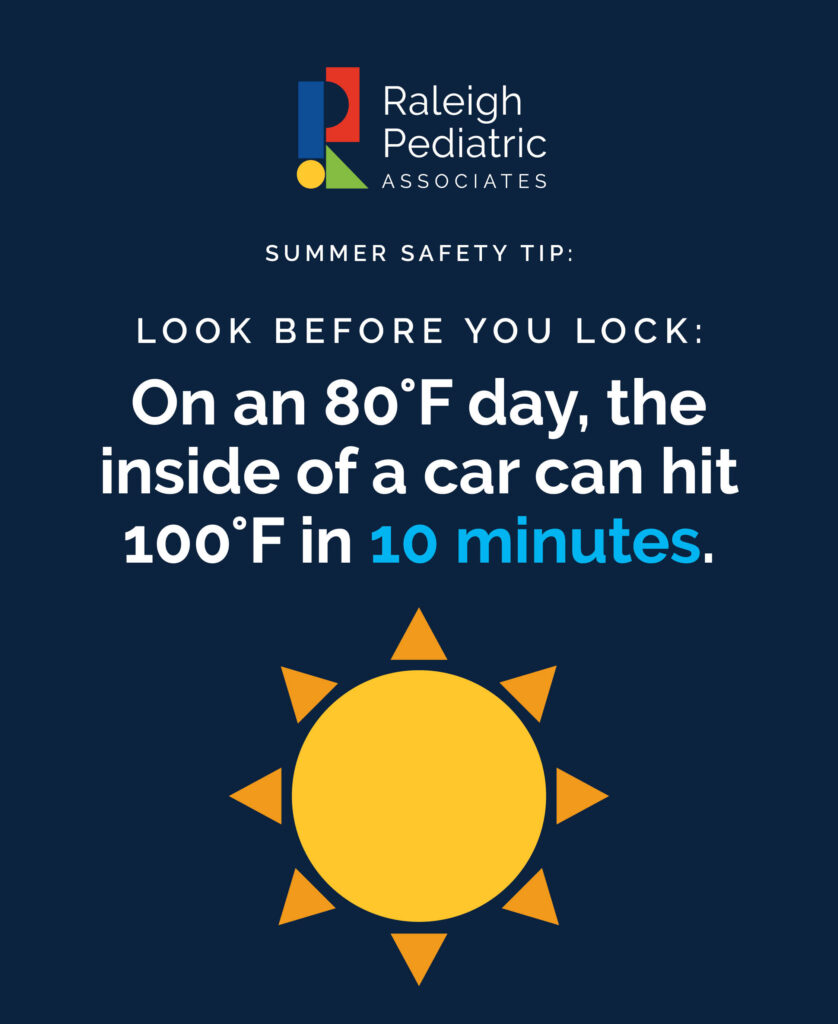
The internal temperature of a parked vehicle can climb by 20 degrees in a mere 10 minutes, transforming an enclosed cabin into a fatal environment even on a mild 75°F day with the windows cracked. Most vehicular heatstroke tragedies occur when a parent experiences a lapse in memory or when a curious child explores an unmonitored space.
- Always “Look Before You Lock”: Always place a vital item such as your left shoe, cell phone, office badge, or wallet on the floorboard of the backseat. This forces you to open the rear door and check the vehicle at your destination.
- Secure the Environment: Keep your vehicles locked at all times when parked in the driveway or garage. Keep keys and key fobs completely out of reach so toddlers cannot enter a car to play unnoticed.
Heat-Related Illnesses
- Heat Exhaustion: Characterized by heavy sweating, cold or clammy skin, muscle cramps, dizziness, nausea, and headache. Move the child to a cool space, apply damp cloths, and sip water.
- Heat Stroke: A medical emergency marked by a body temperature above 103°F, hot, red, dry skin (no sweating), rapid pulse, confusion, or loss of consciousness. Call 911 immediately.
General Sun and Temperature Safeguards
When playing outdoors, remember to hydrate! Do not wait until a child complains of thirst; offer water on a routine basis every 20 minutes.
Keep infants under six months strictly out of direct sunlight, relying on shade and lightweight clothing rather than sunscreen, and feed them breastmilk or formula exclusively.
Finally, avoid high-intensity activities between 10:00 AM and 4:00 PM, and always touch playground slides or swings with the back of your hand first to prevent thermal skin burns.
Summer Safety Tip #2: Water Safety is a 24/7 Obligation
Drowning remains the leading cause of accidental death among children aged 1 to 4. Young children can drown silently in as little as one to two inches of water, and it can occur in less than two minutes. Protecting your child requires recognizing that water hazards exist far beyond structured swim sessions. According to data from the American Academy of Pediatrics (AAP), 69% of drownings among toddlers happen during non-swim times when they are not expected to be near water.
An effective drowning prevention strategy recommended by the AAP involves implementing multiple “layers of protection”, both around the home at all hours and during swim time.
At Home
Preventing unsupervised access to water is the most effective safeguard. Install a four-sided, four-foot-high isolation fence around residential or temporary pools, utilizing self-closing and self-latching gates.
Implement home security alarms or doorknob covers on exterior doors to prevent a curious toddler from slipping outside unnoticed. In the bathroom, install safety latches on toilet seat lids and keep doors firmly closed. Lastly, empty cleaning pails, wading pools, and coolers with melted ice immediately after use.
At the Pool/Beach
When children are swimming, implement Touch Supervision: an adult must remain within arm’s reach of weak swimmers and toddlers at all times.
For group settings, explicitly designate a Water Watcher. This adult wears a specific wristband or lanyard and maintains visual focus on the pool with zero distractions (no phones, reading, or socializing) for a 15-minute shift before formally passing the role to another adult.
Note that inflatable water wings, pool noodles, and generic swim rings are toys, not safety devices. Trust only U.S. Coast Guard-approved life jackets.
Color of Swimwear Matters
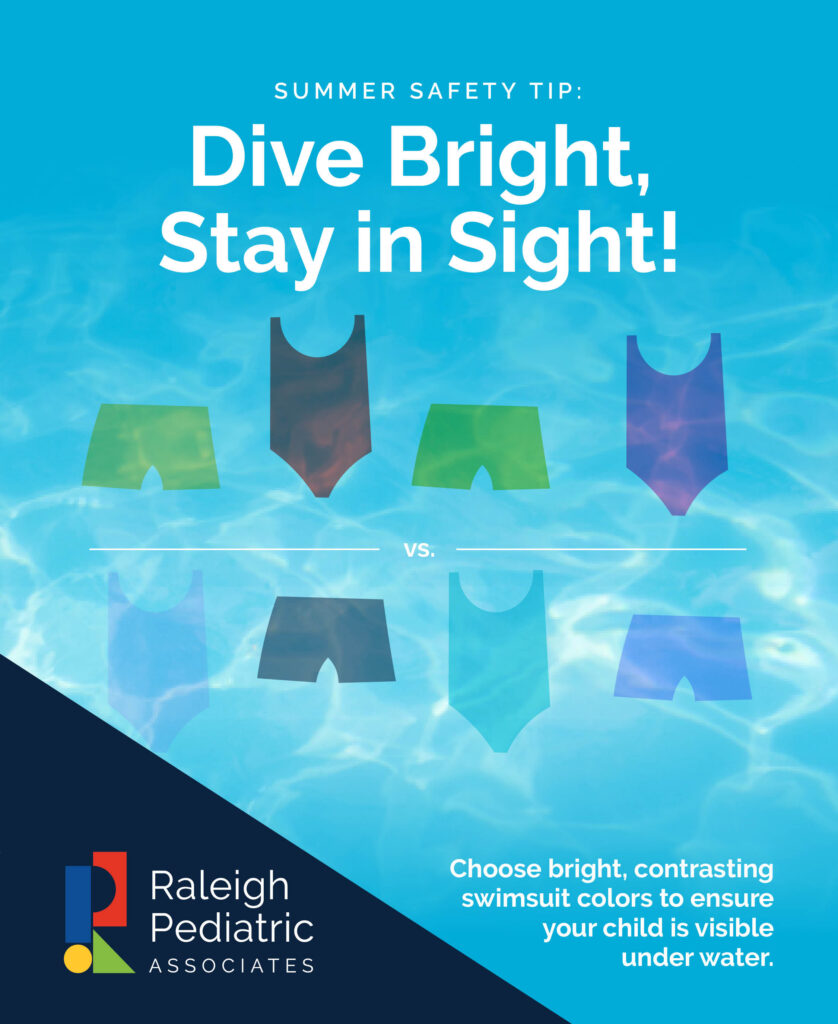
Your child’s swimwear can either increase or decrease their visibility when submerged in the pool, lake or ocean.
Check out this graphic to compare swimsuit colors and discern what color might be best for your child’s swimwear this summer:
Learning CPR Could Save a Life
When an emergency happens, knowing how to respond instantly can make all the difference while waiting for emergency medical services to arrive. While it is incredibly helpful to take an official class and get certified, which we highly recommend for all parents and caregivers, you can still save a life without formal training by using Hands-Only CPR:
- Call 911 Immediately: Put your phone on speaker so you can talk to the dispatcher while keeping your hands free.
- Push Hard and Fast: Place both hands in the center of the child’s chest and press down firmly at a rate of 100 to 120 beats per minute.
- Find the Rhythm: A helpful trick to keep the correct pace is to push to the beat of the classic song “Stayin’ Alive.”
Getting fully certified gives you the hands-on practice and confidence needed to handle choking, infant-specific modifications, and rescue breaths. Consider it an essential part of your family’s summer safety toolkit! Find a class near you today.
Summer Safety Tip #3: Skin and Ear Health
Sun protection is a lifetime investment in your child’s health. Apply a broad-spectrum, water-resistant sunscreen with an SPF of 30 or higher to all exposed skin at least 15 to 30 minutes before heading outside. Reapply every two hours, or immediately after swimming or heavy sweating. Prioritize mineral-based formulas containing zinc oxide or titanium dioxide for children with sensitive skin.
Frequent swimming can also disrupt the natural pH balance of the ear canal, inviting bacterial growth known as Swimmer’s Ear (otitis externa). Prevent this painful condition by instructing your children to tilt their heads to each side after swimming to drain excess water. You can gently dry the outer ear with a soft towel, but never insert cotton swabs into the ear canal, as this packs moisture and bacteria deeper inside.
Summer Safety Tip #4: Firearm Awareness
Childhood safety extends to the homes your children visit. With over a third of American households containing at least one firearm, asking about secure storage should be a routine part of playdate logistics, as normal as discussing food allergies or family pets.
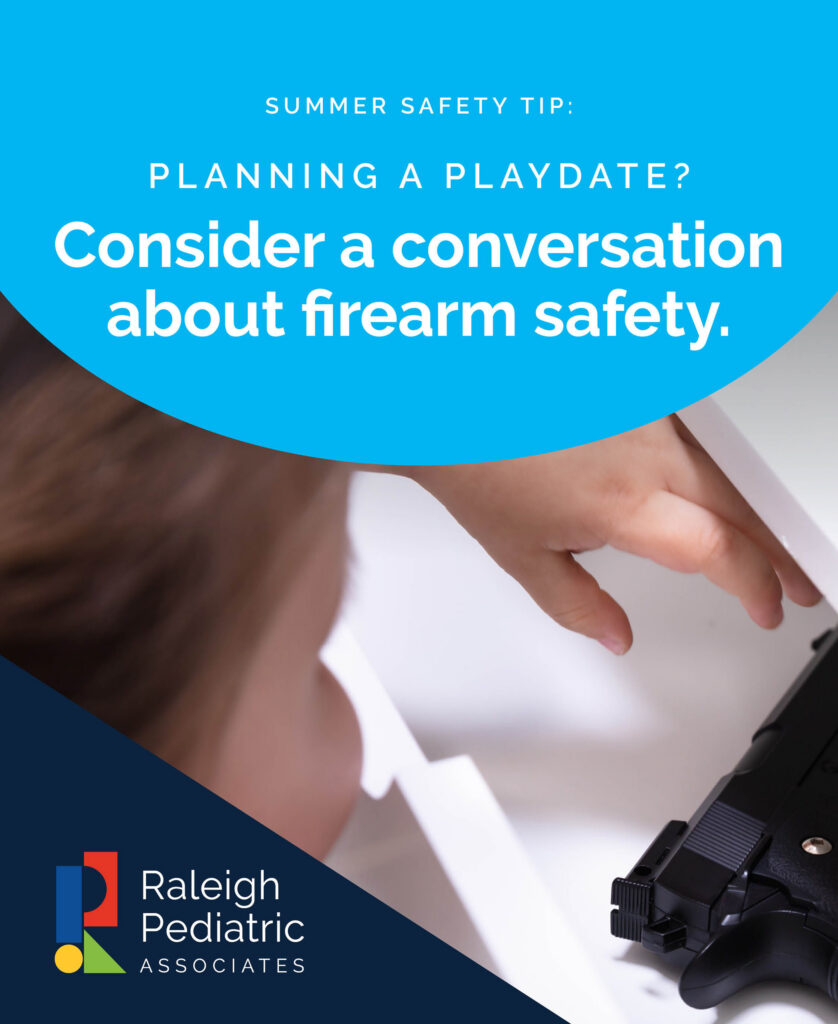
We recognize this conversation can feel socially delicate, but a direct inquiry saves lives. You can normalize the question by framing it as a standard medical safety check recommended by your pediatrician. Consider using these simple phrasing options:
- “The kids are so excited to get together! Just doing a safety check: do you have any firearms in the house, and are they locked away securely?”
- “Our pediatrician reminds us at every checkup to ask before new playdates: are there any accessible or unlocked weapons in your home?”
Safe storage means firearms are stored completely unloaded, locked securely inside a gun safe or with a trigger lock, and the ammunition is housed in a separate locked location.
Summer Safety Tip #5: Helmet Wear
Whether your child is riding a bicycle, scooter, skateboard, or rollerblades, a helmet is non-negotiable for every single ride, even just in your home driveway. A properly fitted helmet reduces the risk of severe traumatic brain injury by up to 88 percent. However, a loose or poorly positioned helmet loses its protective efficacy.
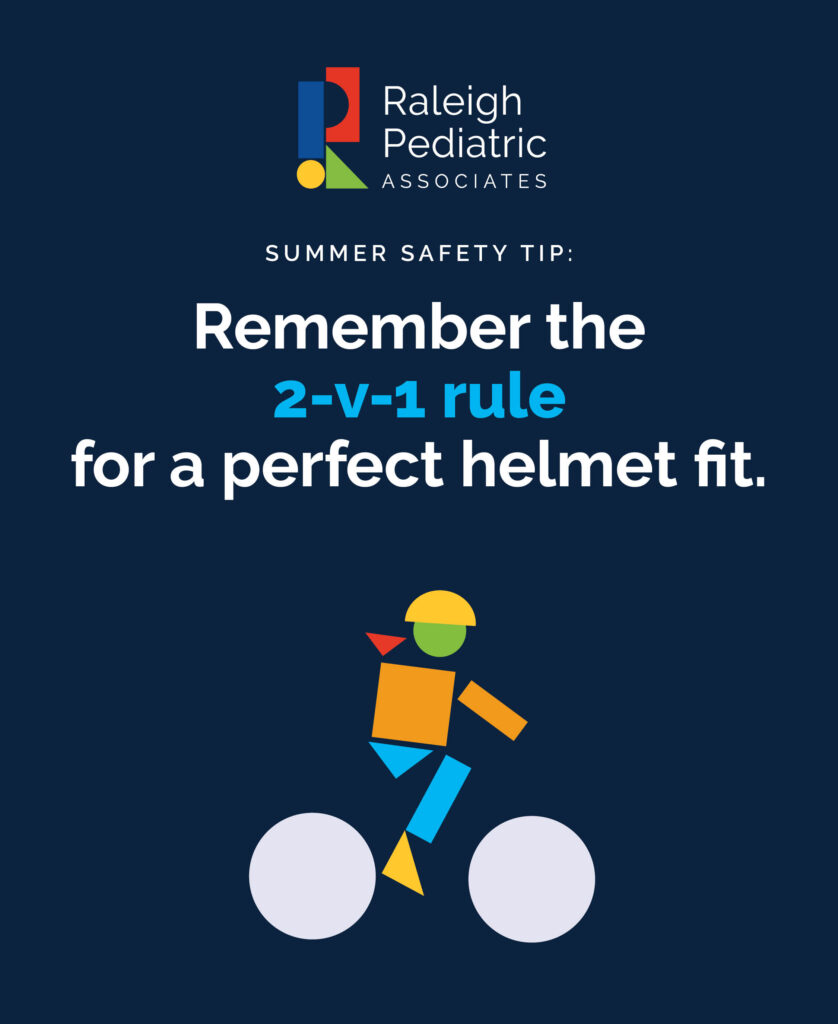
The “2-V-1” Rule for Helmet Safety:
- 2 Fingers above the eyebrows: The helmet must sit level on the head, covering the forehead. It should not tilt back like a hat. Only two fingers should fit between the brow and the helmet brim.
- V-shape side straps: The side straps should form a clean “V” shape sitting directly underneath, and hugging, each ear lobe.
- 1 Finger under the chin: Once buckled, only one finger should fit between the chinstrap and the child’s neck. If they open their mouth wide, the helmet should pull down snugly against the top of their head.
Always inspect helmets for structural damage, and replace any helmet that has sustained a major impact, even if no visible cracks are present on the outer plastic shell.
Partner with Raleigh Pediatrics This Summer
Your child’s safety is a collaborative effort. If you need local resources, swim lesson advice, or have questions about tracking hydration, reach out to our office to schedule a wellness visit. Have a beautiful, safe, and memorable summer!