

Fire Safety Tips for Your Family
Creating a safe home environment for your children involves many steps, from infant-proofing cabinets to teaching road safety. However, one of the most vital—and often overlooked—aspects of household protection is home fire safety.
At Raleigh Pediatrics, our main mission is to support your child’s health and safety at every age. That includes spreading awareness for fire safety in the home. For most families, fall and winter are when we use heat or fire in and around the home more often, making it a great time to refresh your fire safety knowledge.
According to national safety standards, taking a few simple proactive steps around the house can prevent most residential fires and ensure your family is prepared to act swiftly in an emergency. Here is what every parent needs to know about choosing fire extinguishers, building a family escape plan, and practicing daily prevention.
Tip #1: Choose and Use Your Fire Extinguisher
Fire extinguishers are not one-size-fits-all. Using the wrong type of extinguisher on a specific fire can be ineffective or even dangerous.
Fire extinguishers are categorized by the material they are designed to put out:
- Class A: Common combustibles such as wood, paper, fabric, trash, and plastics.
- Class B: Flammable liquids like grease, gasoline, cooking oils, and oil-based paints.
- Class C: Electrical fires involving appliances, power strips, wiring, or circuit breakers.
- Class D: For use with flammable metals (usually utilized in factories).
- Class K: High-temperature kitchen grease and cooking oil fires.
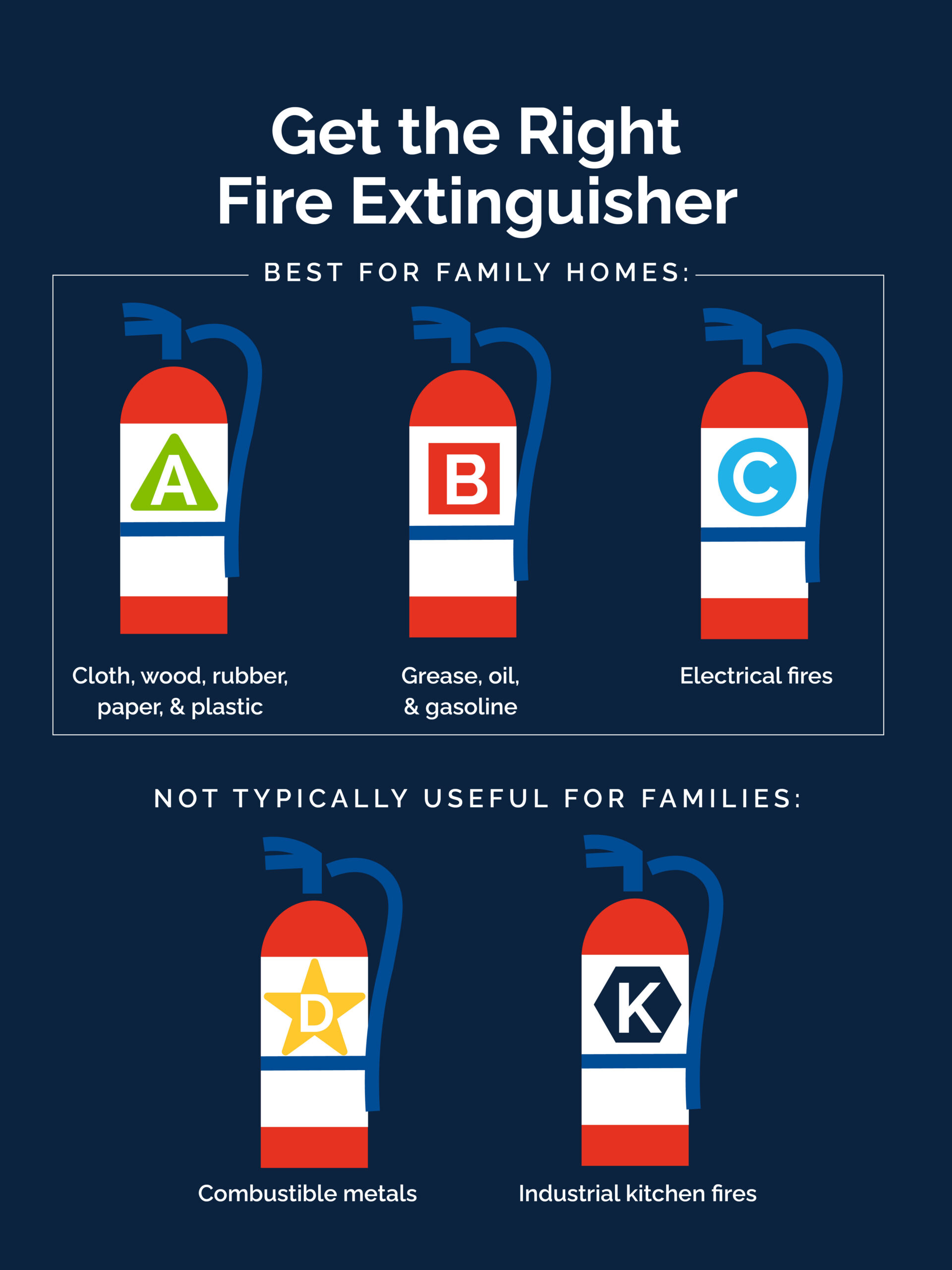
The Standard Household Recommendation
For typical residential homes, experts recommend placing multi-purpose ABC Dry Chemical Extinguishers on every level of your house. Key placement areas include the kitchen, in your garage, and near sleeping areas.
Operating an Extinguisher: The PASS Technique
Make sure all adults and older children in your home memorize the PASS method:
- Pull the safety pin to unlock the lever.
- Aim low, pointing the nozzle directly at the base of the fire.
- Squeeze the handle steadily to release the extinguishing agent.
- Sweep the nozzle from side to side across the base of the flames until fully extinguished.
Tip #2: Design a Family Fire Escape Plan
Once you ensure your home is equipped with fire safety essentials, it’s important to have a fire escape plan. When a smoke alarm goes off, every second counts. Having a clear, practiced escape plan ensures that children know how to respond calmly without hiding or freezing.
Map Two Exits Per Room
Draw a simple diagram of your home floor plan. Walk through each room with your children and point out two ways out (typically a main doorway and a window). Verify that windows open smoothly and screen latches are simple to release.
Establish an Outdoor Meeting Place
Choose a safe, stationary landmark located a safe distance from the house—such as a specific neighborhood light pole, mailbox, or front-yard tree. Ensure every child knows to go straight to this spot.
Assign Specific Responsibilities
Designate adults to assist infants, toddlers, elderly family members, or pets during an emergency. Always assign a secondary adult as a backup in case someone is away from home.
Conduct Family Fire Drills
Practice your home fire drill twice a year during both day and night hours. Remind children never to hide under beds or in closets, and emphasize the essential rule: Get out and stay out.
Here is a free Fire Escape Plan template from FEMA you can use to get started.
Tip #3: Master Everyday Fire Prevention Tips
Preventing household hazards before they start is the most effective way to protect your family. Incorporate these basic safety habits into your regular home routine:
Smoke Detector Maintenance
- Test Monthly: Press the test button on every smoke alarm across all floors monthly.
- Annual Battery Checks: Replace batteries at least once a year (a good reminder is when daylight saving time ends in the fall).
- 10-Year Replacement: Replace entire smoke detector units every 10 years, as internal sensors degrade over time.
Kitchen Rules
- Never leave active stovetop cooking unattended.
- Establish a 3-foot “kid-free zone” around stoves, ovens, and hot appliances.
- Keep dish towels, pot holders, and paper products away from burners.
Electrical & Space Heating
- Plug large appliances directly into wall outlets rather than extension cords or power strips.
- Maintain at least 3 feet of clearance between space heaters and curtains, bedding, or upholstered furniture.
- Turn off portable space heaters when leaving the room or sleeping.
Home Fire Safety Checklist
| Category | Action Required | Recommended Frequency |
| Smoke Alarms | Test function & verify placement near all bedrooms | Monthly |
| Fire Extinguishers | Verify pressure gauge indicator sits in the green zone | Monthly |
| Escape Routes | Walk through exit paths and outdoor meeting location | Twice a year |
| Heating & Outlets | Inspect electrical cords, chimneys, and space heaters | Annually (Fall) |
Free and Affordable Fire Safety Resources in Wake County
Families in Wake County have access to several local resources that help make home fire protection accessible and budget-friendly.
The Raleigh Fire Department—alongside municipal fire departments across Wake County—offers free home fire safety checks and will install up to two smoke alarms at no charge for eligible residents in need.
Additionally, the American Red Cross of Eastern North Carolina partners with local fire stations and volunteers through its Home Fire Campaign to install free smoke detectors and assist parents with drafting customized home evacuation plans.
For cost-effective equipment purchases, local home improvement retailers frequently offer discounted multi-pack fire extinguishers and promotional safety sales throughout the fall, while affordable fire blankets provide a low-cost, reusable alternative for managing small kitchen fires
If you have more questions about fire safety, contact your local fire department through their non-emergency line or your local Red Cross organization.